
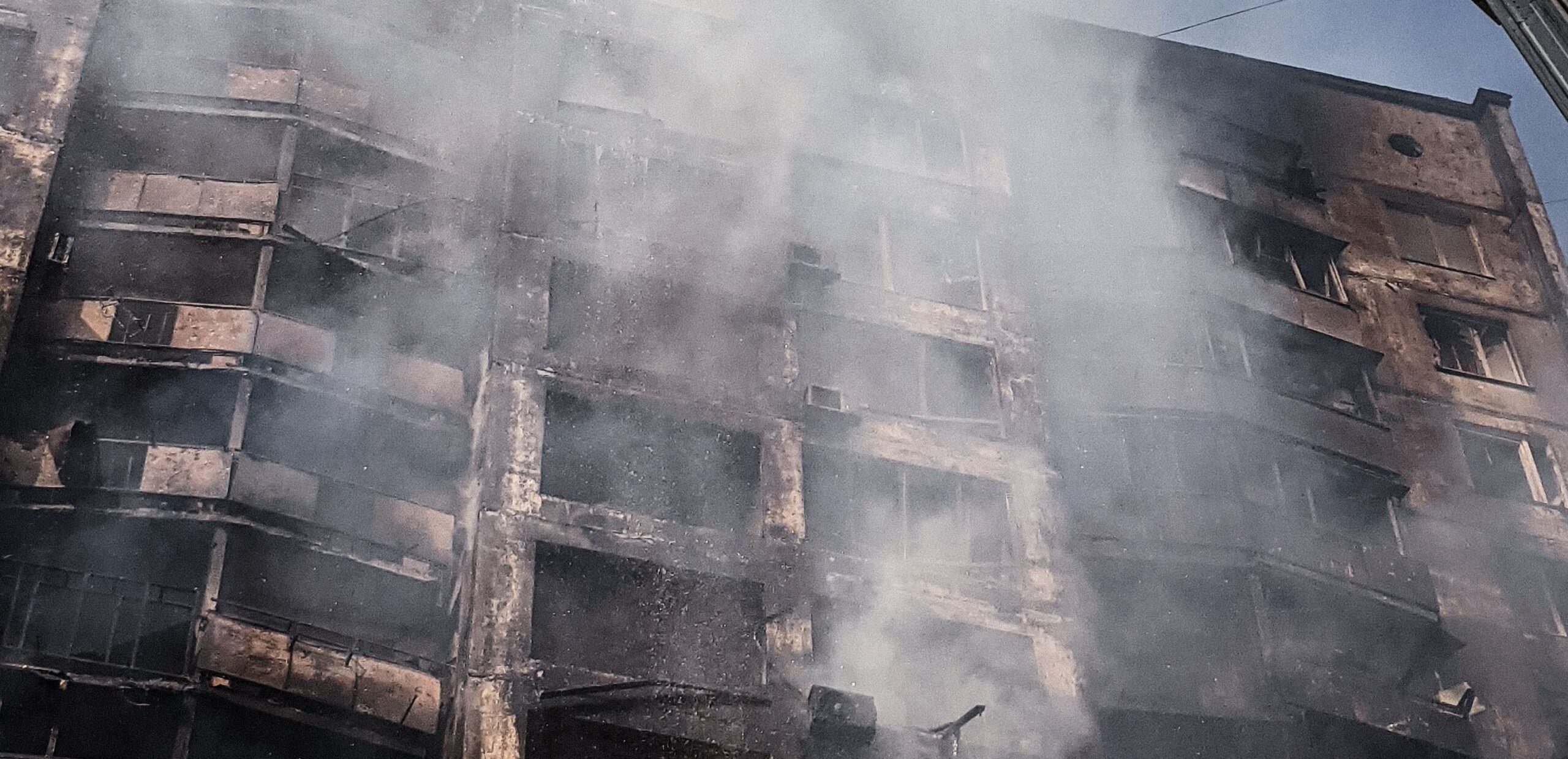
When the Fire Is Out, But the Fight Begins: How to Recover a Fire Insurance Claim in Kenya
MUKAMBA & COMPANY ADVOCATES
A Legal Guide for Business Owners, Property Owners & Policyholders
It begins at three in the morning. The call comes from a security guard, or a neighbour, or the fire brigade itself. By the time the owner arrives, the building is still glowing. Smoke pours into a sky that has turned a strange, lurid orange.
The stock is gone. The machinery is a tangle of melted steel. The shelving that once held a year’s worth of inventory is ash.
And somewhere in the wreckage, the owner thinks of the insurance policy sitting in a drawer back home — or, if they are organised, in a fireproof box — and feels, for the first time since the phone rang, a measure of relief. They are covered. The insurer will sort this out.
That relief, unfortunately, is sometimes premature.
What follows the fire is not simply a matter of calling the insurance company and waiting for a cheque. It is a process — sometimes a long, frustrating, and legally significant one — in which the policyholder must navigate documentation requirements, loss adjustment, policy interpretation, and, in some cases, a claim that is delayed without explanation, reduced without adequate justification, or rejected outright.
This article is written for every business owner, landlord, manufacturer, tenant, and individual who has insured property against fire and wants to understand what that insurance actually means when disaster strikes — and what to do if the insurer does not play fair.
The Fire May Be Over, But the Legal Work Has Begun
A fire insurance policy is, at its heart, a contract. Before anything else, that fact matters. It means the insurer’s obligation to pay is defined not by goodwill, not by the severity of your loss, and not by how long you have been a customer — but by the terms of the written agreement between you and your insurer.
This has a practical consequence that many policyholders discover too late: the policy wording controls almost everything.
What is covered, what is excluded, how quickly you must report the loss, what documents you must produce, and how disputes are to be resolved — all of this lives in the policy. Ignoring the fine print does not make it go away; it simply means you are negotiating from a position of ignorance.
The moment a fire occurs, several legal clocks start ticking simultaneously. The insurer needs to be notified — usually promptly, and in many policies within a defined number of days.
Evidence needs to be preserved.
Documentation of the loss needs to begin. And if the cause of the fire is in any way unclear, investigative processes may be initiated by the insurer, the fire brigade, or even the police.
None of this means that a policyholder with a genuine loss will necessarily face a fight. Many fire insurance claims in Kenya are handled fairly and resolved without dispute.
But the ones that go wrong often do so not because the insurer acted unlawfully from the outset, but because the policyholder unknowingly weakened their own claim — by failing to notify in time, by disposing of damaged goods before an adjuster could inspect them, or by making statements that were inconsistent with the documented evidence.
Understanding the process is therefore not just academic. It is, in the most practical sense, protective.
| Key Point
A fire insurance policy is a contract. Your rights depend on what the policy actually says — not on what you assumed it meant when you signed up. Read your policy carefully, and seek legal advice if anything is unclear. |
What a Fire Insurance Claim Really Depends On
Think of a fire insurance policy the way you might think of a lease agreement. If the lease says the tenant must give three months’ notice before vacating, and the tenant leaves without notice, the landlord has a remedy regardless of how long the tenancy lasted or how pleasant the relationship was. The written terms govern.
Fire insurance works the same way. There are several elements that a claim will turn on, and understanding them early can make an enormous difference.
Coverage and Scope
Not all fire policies are alike. Some cover only the building structure. Others cover contents and stock. Some extend to business interruption losses — the income you lose while you cannot trade.
Some cover machinery and equipment specifically. The precise scope of your coverage determines what you can claim, and a common mistake is to assume that ‘fire insurance’ covers everything.
Exclusions
Every policy contains exclusions — situations in which the insurer is not obliged to pay regardless of the loss.
Common exclusions in fire policies include losses caused by war or civil commotion, spontaneous combustion in certain goods, fires caused by the policyholder’s own wilful act or gross negligence (depending on the precise wording), and losses arising from certain hazardous activities that were not disclosed at the time of taking out the policy.
Some exclusion clauses are broad; some are narrow. Whether an exclusion applies to your specific facts is often a genuine legal question, and the insurer’s mere assertion that an exclusion applies is not the last word.
Policy exclusions are generally interpreted strictly against the insurer in cases of ambiguity — but this is a principle that has to be invoked with evidence and, where necessary, legal argument.
Warranties and Conditions
A warranty in an insurance policy is a promise by the policyholder that something is true — for example, that the premises are equipped with a fire suppression system, that the property is not left unoccupied for more than a specified number of days, or that certain materials are not stored on site.
Breach of a warranty can, depending on the policy terms and the applicable law, give the insurer grounds to avoid paying a claim even if the breach had no direct connection to the loss.
This is an area where Kenyan policyholders are sometimes caught off guard. It is worth reviewing your policy conditions carefully with legal assistance before a claim arises, not after.
Excess and Underinsurance
Most fire policies include an excess — an amount the policyholder must bear before the insurer’s liability kicks in. This is usually a fixed sum or a percentage of the loss. But the more significant issue, and one that causes genuine hardship for business owners, is underinsurance.
Underinsurance occurs when the sum insured — the amount declared when the policy was taken out — is less than the actual value of the property or stock at the time of loss. When a property is underinsured, many policies apply what is known as the average clause: the insurer pays only a proportionate share of the loss. If your stock was worth Ksh 10 million but you insured it for Ksh 5 million, you may only recover half of your actual loss — even if the entire stock was destroyed.
This is not a technicality. It is a standard contractual mechanism, and it catches business owners who insured their property years ago and never updated their coverage as values rose.
| Practical Example — The Average Clause
A warehouse owner insures machinery for Ksh 8 million. By the time a fire occurs, the machinery is worth Ksh 16 million. A fire destroys half the machinery — a loss of Ksh 8 million. Under the average clause, the insurer may pay only: (8M / 16M) × 8M = Ksh 4 million. The owner recovers half of the actual loss — not because the policy was breached, but because the insured sum was too low. |
Why Insurers Delay, Question, or Reduce Claims
An insurer that delays or disputes a claim is not necessarily acting unlawfully. Claims handling is a process that involves investigation, documentation review, and often the appointment of an independent loss adjuster. These steps take time. The law recognises this.
Under Kenya’s Insurance (Claims Management) Guidelines, 2022, issued by the Insurance Regulatory Authority under the Insurance Act (Cap. 487), insurers are required to acknowledge claims, process documentation, and communicate with policyholders within defined timeframes. These guidelines place obligations on insurers to handle claims promptly, fairly, and transparently. Where an insurer fails to meet these obligations, a policyholder may have recourse — but establishing that failure requires knowing what the guidelines require.
The most common legitimate reasons for delay or dispute include:
- Incomplete documentation: The policyholder has not yet produced the required evidence of loss, inventories, receipts, or valuations.
- Cause of fire: The insurer is investigating whether the cause falls within a policy exclusion, or whether there are grounds to suspect arson or wilful conduct.
- Disclosure issues: The insurer is reviewing whether the policyholder made full and accurate disclosure at the time the policy was issued.
- Valuation disputes: The insurer and policyholder disagree on the value of the goods or property destroyed.
- Subrogation investigation: The insurer is investigating whether a third party caused the fire and whether the insurer can recover from that third party after paying the claim.
Where delay is unreasonable — where the insurer sits in silence without explanation, or raises new objections repeatedly once earlier ones are addressed — the policyholder’s legal position is stronger. The question is always whether the conduct was justified by the facts and the policy terms, or whether it crossed the line into unfair dealing that the law does not sanction.
The Evidence That Saves a Fire Claim
If there is one thing that separates successful fire insurance claims from failed ones, it is documentation. Not the strength of the fire. Not how long the policyholder has been insured. Not the relationship with the broker. Documentation.
The reason is simple: a fire destroys physical evidence. Once the smoke clears, the insurer cannot verify what was in a warehouse by looking at the warehouse. It must rely on records — purchase receipts, inventory lists, financial accounts, photographs, valuations — to establish that the claimed loss is real, and to quantify it.
If those records are gone (because they too were in the building), and if no copies exist elsewhere, the claim becomes extremely difficult to substantiate. This is one of the most common — and most avoidable — reasons that fire claims fail or are reduced sharply.
What to Preserve and Produce
In the immediate aftermath of a fire, and throughout the claims process, the following categories of evidence are typically essential:
- Photographs and video of the damaged premises, taken as soon as it is safe to do so — before any clearing or cleaning begins.
- The fire brigade report, which documents when the brigade attended, the nature of the fire, and any initial assessment of the cause.
- A police abstract, where the fire was the subject of a police report, or where there is any suggestion of arson or malicious conduct.
- Your original insurance policy documents and any endorsements or amendments made since the policy was first issued.
- Stock records and inventory lists, including purchase invoices, delivery notes, and stock-take records predating the fire.
- Financial records: management accounts, audited accounts, VAT records, and bank statements that corroborate the value of the business and its stock.
- Proof of ownership for machinery, equipment, furniture, or fixtures — purchase receipts, depreciation schedules, asset registers.
- Your notification to the insurer — in writing, with evidence of receipt.
- All correspondence with the insurer and loss adjuster, kept in a single organised file.
Do not dispose of or remove damaged goods before the loss adjuster has had an opportunity to inspect them, unless health and safety considerations make this unavoidable. If early removal is necessary, photograph everything thoroughly first and document what was removed, by whom, and where it was taken.
| Practical Note
One of the most protective steps a business can take before any fire ever occurs is to maintain digital copies of all critical records — stock registers, purchase invoices, asset lists, financial accounts — stored off-site or in the cloud. If the physical records burn, the claim can still be substantiated. If both the physical and digital records are lost, the claim becomes very difficult to support. |
The Loss Adjuster: What They Are and What They Are Not
Most significant fire claims will involve the appointment of a loss adjuster. This is an independent professional appointed by the insurer to investigate the claim, assess the extent of the loss, and produce a report on which the insurer will base its settlement offer.
The loss adjuster is not your advocate. They are not on your side. They are independent in the technical sense — they are not the insurer’s employee — but they are appointed and paid by the insurer, and their report naturally reflects an investigation conducted from the insurer’s perspective.
This does not mean the adjuster will act dishonestly. Most loss adjusters are professional, thorough, and fair. But it does mean that a policyholder who simply accepts the adjuster’s findings without question, and who provides information without legal guidance, may be signing off on a settlement that does not reflect their true entitlement.
A policyholder is entirely entitled to engage their own expert — a public loss assessor or legal adviser — to review the adjuster’s report, challenge its conclusions where they are incorrect, and negotiate the settlement on their behalf. In complex or high-value claims, this is not a luxury; it is a practical necessity.
The loss adjuster’s report is also not the final decision. It is a recommendation. The insurer makes the final decision on whether and how much to pay. If you disagree with the outcome, the process does not end there.
What to Do When the Insurer Is Silent or Unhelpful
Silence from an insurer is one of the most frustrating experiences a policyholder can face. You have submitted your documents. You have cooperated with the adjuster. And then — nothing. Weeks pass. The phone calls go unanswered. The claim status is ‘under review’, indefinitely.
This is where the Insurance (Claims Management) Guidelines, 2022 become directly relevant.
The Guidelines, issued pursuant to section 179 of the Insurance Act, impose obligations on insurers regarding the timely handling of claims, communication with policyholders, and the provision of written reasons for any denial or reduction of a claim.
Where an insurer is failing to meet these obligations, the policyholder has several avenues:
Internal Escalation
Write formally to the insurer’s claims department, then to its senior management, requesting a status update and a written response within a defined deadline. This creates a paper trail and puts the insurer on notice that you are informed and will pursue the matter.
Complaint to the Insurance Regulatory Authority
The Insurance Regulatory Authority (IRA) is the statutory regulator of the insurance industry in Kenya under the Insurance Act, Cap. 487. The IRA has a complaints function and has, in appropriate cases, intervened in disputes between policyholders and insurers.
A complaint to the IRA does not guarantee payment of your claim, but it does signal regulatory scrutiny and may accelerate a response from the insurer. It is a remedy that exists in parallel with — not instead of — legal proceedings.
Legal Action
Where an insurer wrongfully repudiates a claim, or delays payment without justification beyond what is reasonable in the circumstances, the policyholder may bring a civil claim for the insured amount as a debt owed under the contract of insurance.
Kenyan courts have jurisdiction to hear such claims. Depending on the quantum of the claim and its nature, proceedings may be commenced in the Magistrates’ Court, the Environment and Land Court, or the High Court.
It is important to note that litigation is not always necessary. Many fire insurance disputes are resolved through negotiation once the insurer understands that the policyholder has competent legal representation and a solid factual and legal position. A well-drafted letter of demand, supported by the evidence, sometimes moves a claim that has been stuck for months.
Common Mistakes That Weaken a Fire Claim
Experience in insurance disputes reveals a pattern of avoidable errors. These mistakes rarely arise from dishonesty; they arise from not knowing the process.
- Failing to notify the insurer within the time required by the policy. Some policies specify 24 or 48 hours; others allow a longer period. Breaching this condition can give the insurer grounds to dispute the claim. Late notification:
- Giving different versions of events to the adjuster, the police, the broker, and the insurer. Inconsistencies — even innocent ones — create suspicion and complicate the claim. Inconsistent accounts:
- Clearing the premises, selling salvage, or removing damaged goods before the adjuster has inspected them. Once the evidence is gone, the adjuster must rely on what the policyholder says — which is a much weaker position. Disposing of evidence:
- Claiming for goods or property that were not actually in the premises, or overstating values. This is the surest way to destroy an otherwise valid claim, and may have criminal consequences. Inflating the claim:
- Accepting a settlement offer without reviewing it carefully and without advice. Once you sign a full and final settlement, your rights to further recovery are generally extinguished. Signing without reading:
- The absence of financial records, stock registers, and purchase invoices makes it almost impossible to substantiate the value of a loss. This problem is entirely preventable. Not keeping records:
How to Protect Yourself Before the Fire Happens
The best time to prepare for a fire insurance claim is before there is ever a fire. There are straightforward steps that every business owner and property owner can take now, which will make an enormous practical difference later.
- Check that your sum insured reflects current replacement values, not the values declared five years ago. Inflation and business growth mean that many businesses are chronically underinsured without realising it. Review your policy annually.
- Stock registers, purchase invoices, asset registers, audited accounts, and financial records should all be backed up digitally and stored in a location that will survive a fire at your premises. Keep off-site backups of critical records.
- Date-stamped photographs of your stock, equipment, and interior layout provide valuable contemporaneous evidence in the event of a claim. Photograph your premises and inventory periodically.
- Review the notification requirements, the exclusions, and the warranties with your broker or legal adviser. Do not wait for a claim to discover what the policy actually requires of you. Understand your policy’s conditions.
- Compliance with fire safety laws is not only a regulatory requirement; it is a precaution that supports your claim if a fire occurs. Evidence that you maintained fire extinguishers, fire exits, and suppression systems strengthens your position considerably. Maintain your fire safety obligations.
- Property damage is one loss; loss of income while you cannot trade is another. Many business owners who suffer a fire discover, too late, that they insured their stock but not their trading income. Consider business interruption cover.
When a Legal Claim Becomes Necessary
Negotiation resolves many insurance disputes. But not all. There are cases where an insurer has made a clear decision to reject a claim, and where the rejection is, in our considered view, unjustified on the facts and the law. In those cases, litigation is sometimes the only remedy.
Kenyan courts have consistently upheld the contractual rights of policyholders where insurers have wrongfully denied valid claims. A claim that is properly pleaded, supported by solid documentation, and advanced by competent counsel stands a genuine prospect of success. The mere prospect of proceedings — and the attendant cost and reputational consideration for the insurer — also has a way of encouraging settlements that earlier seemed impossible.
The decision to litigate should never be taken lightly. It involves cost, time, and uncertainty. But it should equally not be abandoned simply because the insurer says no. The insurer’s position is not the law. Whether a claim is legally valid is a question for the courts, not for the insurer alone to decide.
Early legal advice — sought when the claim is first delayed or disputed, not after months of fruitless correspondence — gives a policyholder the best chance of resolving the matter efficiently, whether through settlement or through the courts.
Final Thoughts
A fire is one of the most traumatic events that can happen to a business or a family. It destroys in hours what was built over years. The insurance policy exists precisely for this moment — and when it works, it is genuinely the difference between recovery and ruin.
But the insurance policy is a contract, not a guarantee. Its protections depend on the policyholder understanding what it says and how it works — and on acting promptly, carefully, and with good advice when a claim arises.
If your claim has been delayed, questioned, reduced, or rejected, it does not mean the matter is over. It means the matter has entered a new phase — one in which legal advice and advocacy may make all the difference.
At Mukamba & Company Advocates, we understand both sides of the insurance relationship. We have advised clients on the preparation and pursuit of complex insurance claims, on disputes with loss adjusters, and on the enforcement of policy rights where insurers have acted unreasonably. We bring that experience to every client who comes to us with a fire insurance dispute — or who wants to understand their rights before disaster strikes.
Speak to a SpecialistIf your fire insurance claim has been delayed, disputed, or rejected — or if you want to understand your rights before you need them — contact us for a confidential consultation. MUKAMBA & COMPANY ADVOCATES 11th & 12th Floor, West Park Towers Mpesi Lane, off Muthithi Road, Westlands, Nairobi, Kenya Email: info@mukambalaw.com +254 706 223 157 | +254 797 450 653 |
© 2026 Mukamba & Company Advocates. All rights reserved. This article is for general information only and does not constitute legal advice. Readers should seek independent legal counsel in relation to their specific circumstances.