
Can a Family Trust Stop Your Children From Fighting Over Inheritance?
West Park Towers, Mpesi Lane, Westlands, Nairobi | info@mukambalaw.com | mukambalaw.com
It won’t guarantee peace — but it removes the single biggest cause of the fight
By Eugene Mukamba, Advocate
Walk into almost any succession court in Kenya on a busy day, and you will find the same story wearing different names: siblings who grew up sharing a compound, now suing each other over who gets which parcel.
It rarely starts with greed.
It starts with ambiguity — no clear record of what the parent actually intended, and everyone left to argue their own version of it.
Why Family Land Disputes Happen in the First Place
When a parent dies leaving land in their own name with no trust and no clear will, the property falls into the succession process as an undivided asset, to be shared among beneficiaries determined by the Law of Succession Act or by a contested will.
Every sibling becomes a co-owner with an arguable claim; no one has final authority to manage the property, and disagreement over even small decisions — who farms it, who can sell their share, who moves in — has nowhere to go but court.
How a Trust Changes That Structure
Once land is properly transferred into an incorporated family trust, it is no longer owned by the individual family members at all — it is owned by the trust itself, a separate legal person under the Trustees (Perpetual Succession) Act.
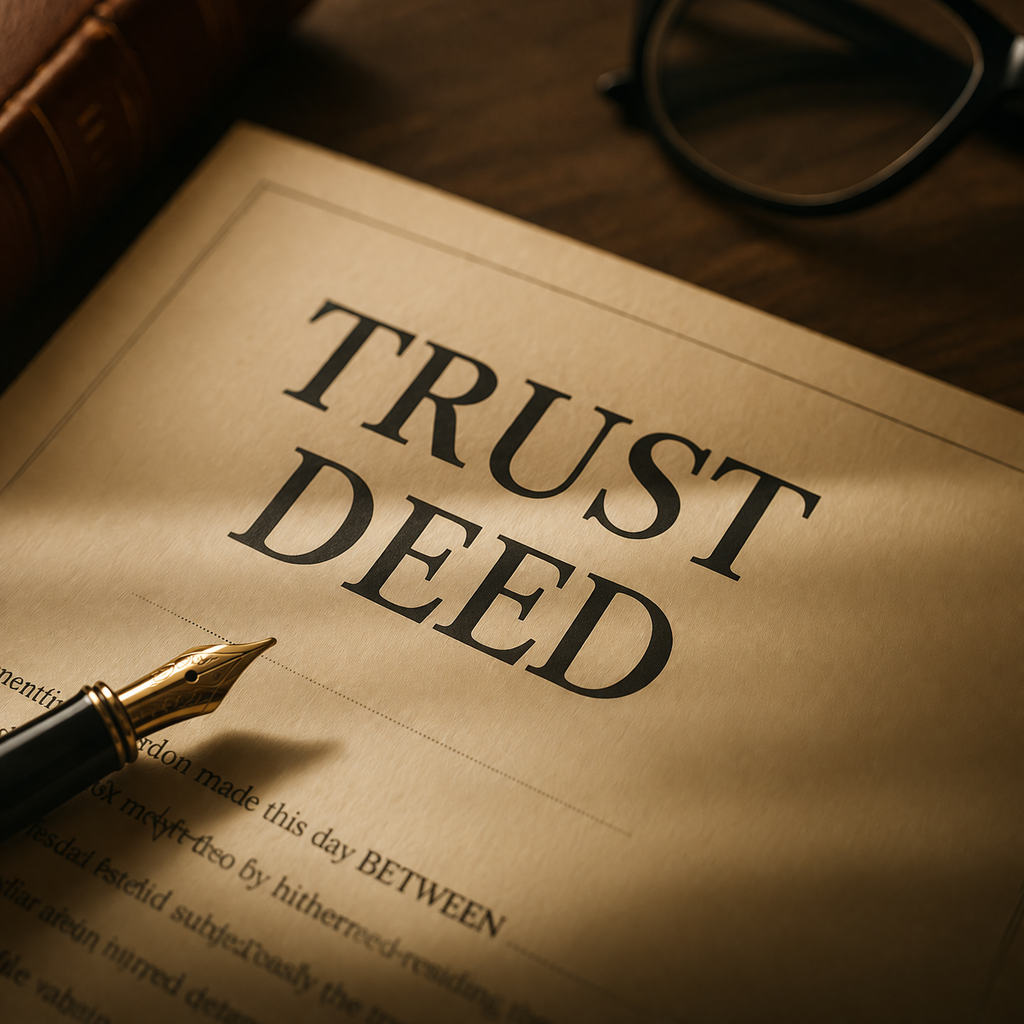
The trustees manage it according to rules the settlor wrote down, in most cases while still alive and of sound mind, long before any dispute has a chance to start. Instead of siblings arguing over what their late parent “probably wanted”, there is a document that already says so.
| Why this works better than a verbal understanding
Families frequently believe an informal, verbal understanding — “we’ve always agreed the last-born gets the homestead” — will hold. It rarely survives a death, because it is not enforceable and every party remembers it differently. A trust deed replaces memory and goodwill with a document trustees are legally bound to follow. |
A Trust Doesn’t Remove Every Risk
It would be dishonest to promise a trust makes disputes impossible.
Beneficiaries can still challenge a trust’s validity — alleging the settlor lacked capacity, was unduly influenced, or that the deed was improperly executed.
This is exactly why the drafting and execution of the deed matters so much: a trust built on a rushed, badly witnessed document is nearly as vulnerable to challenge as no plan at all.
A properly drafted and incorporated trust, by contrast, is considerably harder to unpick than an informal family understanding or a will drafted without proper legal guidance.
Where an Independent Trustee Helps
Naming one of the beneficiaries themselves as sole trustee often just relocates the conflict rather than resolving it — the sibling in charge becomes the sibling everyone else suspects.
Bringing in an independent professional trustee, or requiring trustee decisions to be made jointly, removes that single point of resentment and gives every beneficiary the same answer: the trustees are simply following what the deed says.
The Bottom Line
A trust will not stop your children from disagreeing.
What it does is take the biggest fuel for that disagreement — ambiguity about who is entitled to what, and who has authority to decide — off the table while you are still alive to settle it yourself.
| Talk to an Advocate
This article is general information, not legal advice for your specific situation. Every case turns on its own facts and evidence. Book a free 20-minute consultation: +254 706 223 157 / +254 797 450 653 | info@mukambalaw.com | West Park Towers, Mpesi Lane, Westlands, Nairobi |